
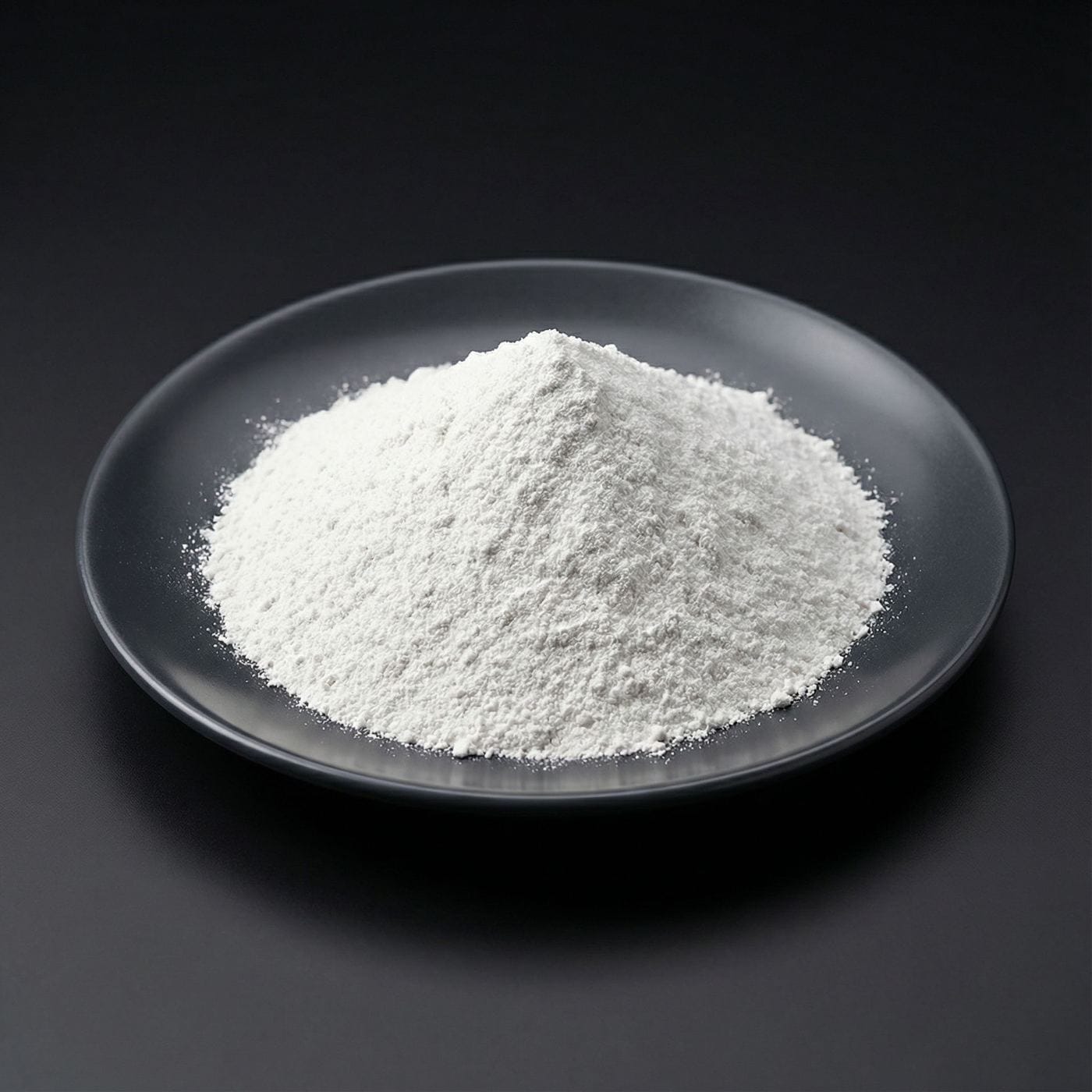
When you purchase the material, the delivered powder must match the values you and your supplier agreed on. This guide gives you a step-by-step workflow for checking incoming batches, documenting results, and asking the right questions when data is missing.
Mg(OH)2 for Fire Retardant Coatings: What to Verify in Incoming Batches
Magnesium hydroxide (Mg(OH)2) is used as a flame retardant filler in intumescent and fireproof coatings. Its performance depends on consistent physical and chemical properties. Verification is not about assuming quality—it is about confirming that the delivered product matches the documented values you and your supplier agreed on.
The product page for Mg(OH)2 for Fire Retardant Coatings lists specific values for content, fineness, whiteness, and pH. These are the starting points for your incoming inspection. Your own purchase specification may include additional requirements, so always compare the supplier’s stated values with your own agreed limits.
Key Parameters to Record and Compare
When a batch of Mg(OH)2 arrives, record the following parameters and compare them with your specification. The values below are examples from the supplier’s published data; your actual specification may differ.
- Mg(OH)2 Content: The supplier states ≥ 96.0% (test method ISO/ASTM). Verify the certificate of analysis (COA) for each batch. – Fineness: 1250 mesh (ISO/ASTM). – Whiteness: ≥ 95% (ISO/ASTM). – pH: The product page mentions pH 9-10 for the coatings-grade material. Confirm the pH range with your supplier. – Oil Absorption: The supplier lists ‘Medium’ (ISO/ASTM).
Record the batch number, the values stated on the COA, and the test methods used. If any parameter is missing from the documentation, list it as a question for the supplier.
Test Methods and Documentation to Request
The product page references ISO/ASTM methods for content, fineness, whiteness, and oil absorption. When you receive a batch, request the following documents:
- Certificate of Analysis (COA) with batch-specific values. – Test reports from the supplier’s laboratory, if available. – A statement of the test methods used, so you can compare with your own testing procedures.
If you perform your own incoming testing, use the same methods as your specification. If you do not have in-house testing capability, you may rely on the supplier’s COA, but you should still verify that the COA is complete and matches the batch number.
Performance-Related Checks: Fire Resistance and Char Expansion
The product page claims that the coatings-grade Mg(OH)2 enables a 2-hour fire resistance (maintaining steel <550°C for 120+ minutes) and high char expansion (30% char expansion). These are performance claims that depend on the full coating formulation, not just the Mg(OH)2 alone. Therefore, you cannot verify these properties by testing the powder alone. Instead, you should:
- Ask your supplier for the test conditions under which these claims were observed (e.g., coating thickness, substrate, fire test standard). – If you have a qualified coating formulation, you may run your own fire tests to confirm performance. – If the supplier cannot provide test conditions, treat the claims as indicative and not as a guarantee for your specific system.
Request the test report and check whether your formulation matches the tested one.
Specification Verification Record: What to Document
Create a verification record for each incoming batch. Include the following fields:
- Batch number and supplier name. – Date of receipt. – For each parameter (content, fineness, whiteness, pH, oil absorption), record the specified value, the COA value, and the test method. – Note any deviations from your specification. – If a parameter is missing, write “To be confirmed by supplier” and list it as an open question.
Keep this record for traceability. If a batch fails to meet your specification, you can use the record to discuss corrective actions with the supplier.
Inquiry and Incoming Inspection Checklist
When you place an order or receive a delivery, use this checklist to guide your communication with the supplier:
- Confirm that the product grade matches your specification (e.g., coatings-grade, 1250 mesh). – Request the COA for each batch before shipment or upon delivery. – Ask for the test methods used for each parameter. – If you need to verify fire performance, ask for the test conditions and reports. – If any data is missing, ask the supplier to provide it before you accept the batch.
For example, if the COA does not list the pH value, you should ask: “What is the pH range for this batch, and what test method was used?” Do not assume the value is within your specification.
Handling Missing Data and Evidence Boundaries
When the supplier’s documentation does not include a required parameter, do not guess the value. Instead, follow this procedure:
- Flag the missing parameter in your verification record. 2. Request the missing data from the supplier in writing, specifying the parameter and the test method you expect. 3. Hold acceptance of the batch until the supplier provides the missing information or you agree on an alternative verification method. 4. Document the supplier’s response and the date you received it.
For example, if the COA does not list the oil absorption value, ask: “What is the oil absorption value for this batch, and what test method was used?” If the supplier cannot provide the test method, you may need to arrange independent testing or negotiate a revised specification.
Conclusion
Verifying the material against your purchase specification is a systematic process. Always compare the supplier’s stated values with your own specification, and do not hesitate to pause acceptance if information is missing.
For more information about the product, visit the Mg(OH)2 for Fire Retardant Coatings page. You may also explore related products like Magnesium hydroxide flame retardant manufacturer or Fire Retardant Materials Solutions for broader context.
Complete the purchasing decision record
Turn the review into a traceable purchasing record before making the final disposition. Give the record a unique reference and identify the requested grade, supplier, quotation reference, document revision, proposed lot, reviewer, and review date. For every specification row, copy the field name exactly as it appears in the source document. Keep separate columns for the value stated on the public product page, the value required by the purchase specification, the value reported for the proposed batch, the cited test method, and the document that contains the result. Do not copy a value from one column into another when the supplier has not supplied it.
Mark each row with a neutral status: confirmed against the agreed requirement, open for clarification, or not accepted against the agreed requirement. A blank field remains open; it is not a pass. For each open row, write one precise question that names the missing field and the document or batch under review. Record the supplier response beside the original question, together with the response date and any replacement document revision. This preserves the difference between a published specification, a batch-specific submission, and a later clarification.
Use the same record when the shipment arrives. Match the delivery reference and lot identifier to the documents reviewed before ordering, then record which incoming checks were completed and where their results are stored. If a value, method, lot reference, or document version does not match the agreed purchasing record, place that row on hold and assign an owner for clarification. Record the final disposition and the evidence used for it. This approach creates an auditable decision without filling evidence gaps with assumptions about product performance or supplier capability.
FAQ
What are the key specifications to verify for Mg(OH)2 used in fire retardant coatings?
Key specifications include Mg(OH)2 content (≥96.0%), fineness (1250 mesh), whiteness (≥95%), pH (9-10 for coatings grade), and oil absorption (medium). Always compare these with your purchase specification and request the certificate of analysis for each batch.
How can I verify the fire resistance performance of Mg(OH)2 in coatings?
Fire resistance claims like 2-hour rating depend on the full coating formulation. You cannot verify them by testing the powder alone. Ask your supplier for the test conditions and reports, or run your own fire tests on your qualified formulation.
What documents should I request from the supplier?
Request a certificate of analysis (COA) with batch-specific values, test reports, and a statement of test methods used. If any parameter is missing, ask the supplier to provide it before accepting the batch.