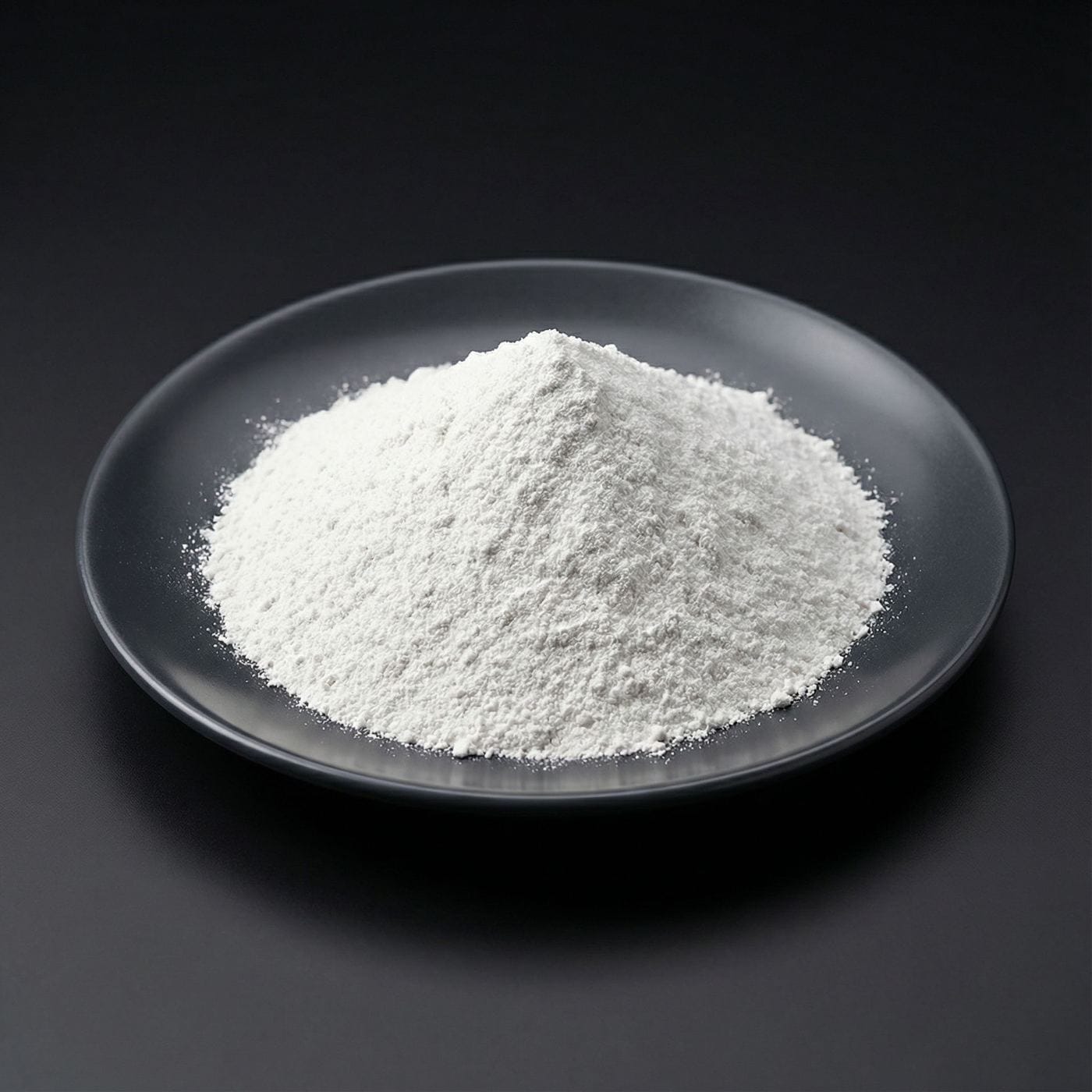
- High Purity & Controlled Reactivity: Industrial magnesium oxide (MgO) for rubber and cable applications requires a purity of ≥96% (often 98-99%) to minimize ionic impurities (e.g., Ca²⁺, Fe³⁺) that can catalyze premature vulcanization or degrade dielectric properties. Low-reactivity grades (e.g., with a citric acid activity of 200-400 seconds) are preferred for consistent scorch safety and uniform cross-linking in thick cable insulation.
- Particle Size & Dispersion Advantages: Manufacturing processes (e.g., controlled calcination of magnesite or brine-based precipitation) yield MgO with a narrow particle size distribution (D50 of 1-5 µm) and high specific surface area (10-30 m²/g). This ensures superior dispersion in rubber compounds, preventing agglomeration that leads to localized hardness or electrical breakdown in high-voltage cables.
- Thermal Stability & Acid Scavenging: The manufacturing advantage of dead-burned or hard-burned MgO (calcined at 900-1400°C) provides high thermal stability (decomposition onset >300°C) and low moisture absorption (<0.5% weight gain at 80% RH). This makes it an effective acid scavenger for halogenated rubber (e.g., chloroprene) and a heat stabilizer in cable jacketing, extending service life under continuous operating temperatures up to 105°C.
- Cost-Effective Process Control: Advanced manufacturing (e.g., rotary kiln or fluidized bed calcination) allows precise tuning of MgO’s iodine adsorption value (10-40 mg/g) and bulk density (0.3-0.6 g/cm³). This enables rubber and cable formulators to select grades that optimize both processing speed (e.g., faster cure rates with higher surface area) and final product hardness (Shore A 60-90), without sacrificing electrical insulation resistance (>10¹² Ω·cm).
-
Introduction: The Role of Industrial Magnesium Oxide in Advanced Polymer Compounding
In the demanding world of advanced polymer compounding, the difference between a standard formulation and a high-performance material often comes down to a single, critical additive. While many focus on primary resins and accelerators, the unsung hero that dictates final product integrity is frequently Industrial Magnesium Oxide (MgO).
This comprehensive guide explores why this specific compound, identified by CAS 1309-48-4, is indispensable for manufacturers in the rubber and cable industries. Selecting the right grade directly impacts your production efficiency and end-product reliability.
The Dual Role of MgO in Rubber Compounding
In rubber formulations, MgO is not merely a filler. It is a functional secondary vulcanizing agent that works synergistically with primary accelerators. Our production facilities engineer high-purity MgO to perform two distinct, critical functions:
- Controlled Vulcanization: It precisely modulates the cure rate, preventing premature scorch while ensuring a complete and uniform cross-linking reaction. This results in a higher cross-linking density, which is the foundation for superior mechanical properties.
- Enhanced Physical Performance: As a direct result of optimized vulcanization, compounds exhibit measurable improvements in key metrics:
- Tensile Strength & Tear Strength: Significantly increased, allowing for thinner walls and higher pressure ratings in hoses.
- Abrasion Resistance: Extended service life in dynamic applications like conveyor belts and hydraulic hoses.
- Thermal Stability & Aging Resistance: The high-purity MgO maintains chemical stability at elevated temperatures, drastically reducing the risk of thermal aging and extending the operational lifespan of the rubber part.
Furthermore, our MgO acts as a processing aid. By improving the fluidity of the rubber compound during mixing, it facilitates a smoother, more consistent production process, directly boosting your throughput and reducing cycle times.
Critical Functions in Cable & Wire Insulation
For the cable and wire industry, the requirements shift from mechanical strength to electrical integrity and safety. Here, MgO plays a non-negotiable role in two key areas:
Function Mechanism & Benefit Dielectric Strength Incorporated directly into insulating compounds, MgO enhances the material’s ability to resist electrical breakdown. This ensures efficient and safe electrical transmission even under high voltage stress. Flame Retardancy & Smoke Suppression MgO acts as a stable, non-toxic flame retardant additive. It significantly improves the flame retardancy of jacketing materials while simultaneously suppressing smoke generation during combustion, a critical safety factor for building and infrastructure cables.
Why Purity and Source Matter
The performance data above is not inherent to all magnesium oxides. It is specifically dependent on high-purity MgO. As a direct manufacturer, we control the entire production chain to guarantee the consistent particle size, high surface area, and chemical purity required to achieve these results. Our rigorous ISO-standard batch testing ensures that every shipment delivers the exact vulcanization control and electrical insulation properties your formulations demand.
In the following sections, we will dissect the specific technical parameters for rubber hose and cable jacket formulations, and provide a framework for selecting the optimal MgO grade for your production line.
Technical Principles: Mechanisms of MgO as a Vulcanizing Agent, Activator, and Filler
As a direct manufacturer of high-purity Industrial magnesia (MgO, CAS 1309-48-4), we understand that the performance of your rubber or cable compound hinges on the precise chemical behavior of your additives. MgO is not a simple filler; it is a multi-functional technical ingredient that operates through distinct chemical mechanisms to control vulcanization, protect the polymer matrix, and enhance physical properties.
1. Role as a Secondary Vulcanizing Agent & Activator
In sulfur-cured rubber systems, MgO functions primarily as a secondary vulcanizing agent and activator. Unlike primary accelerators that initiate cross-linking, MgO works in conjunction with them to:
- Control Cure Rate: It acts as an anti-scorching agent, delaying the onset of vulcanization to prevent premature curing (scorching) during mixing and processing. This provides a wider safety margin for complex molding operations.
- Increase Cross-Linking Density: By optimizing the vulcanization network, MgO helps achieve a higher density of sulfur cross-links between polymer chains. This directly translates to measurable improvements in:
- Tensile Strength (resistance to breaking under tension)
- Elasticity (ability to return to original shape)
- Heat & Aging Resistance (reduced thermal degradation over time)
2. Acid Scavenging & Reinforcement Protection
One of the most critical technical functions of MgO is its role as an acid scavenger, particularly in tire and industrial rubber goods. During vulcanization or high-temperature service, acidic byproducts can form, which attack the polymer backbone and corrode metal reinforcements (e.g., steel cords).
- Neutralization Mechanism: MgO chemically neutralizes these acidic substances, protecting the rubber matrix and the steel cord adhesion system.
- Reinforcement Synergy: When used as a reinforcing filler in rubber hoses, high-purity MgO significantly improves abrasion resistance and tear strength by creating a more robust, chemically stable composite.
3. Enhancing Dielectric & Fire Performance in Cables
For cable insulation and jacketing compounds, MgO provides two distinct technical advantages:
- Dielectric Strength: MgO is incorporated into insulating compounds to enhance dielectric strength, ensuring efficient and safe electrical transmission by resisting electrical breakdown under high voltage.
- Flame Retardancy & Smoke Suppression: Unlike halogenated flame retardants, MgO acts as a non-toxic, smoke-suppressing additive. It improves the flame retardancy of cable jacketing materials, reducing smoke density and toxic gas emissions during combustion.
4. Processing & Thermal Stability Benefits
Beyond chemical reactivity, MgO offers critical physical benefits during manufacturing:
- Improved Flowability: In the mixing process, high-purity MgO helps improve the fluidity of the rubber compound. This makes the production process smoother, reduces energy consumption, and improves overall production efficiency.
- Thermal Stability: With a melting point exceeding >2800°C, MgO maintains stable chemical properties at high temperatures. This prevents thermal aging of the rubber hose or cable jacket, significantly extending the service life of the final product.
Key Technical Parameters for Selection
To achieve these effects, the specific grade of MgO must be carefully selected. Our production facilities control three critical parameters to ensure batch-to-batch consistency under ISO standards:
Parameter Specification Impact on Application Purity ≥97.5% (for tires) / 85–98% (industrial) Higher purity ensures fewer impurities that could disrupt vulcanization or cause electrical leakage. Reactivity High (measured by Iodine Value / BET) High reactivity is essential for effective anti-scorch control and rapid acid absorption. Particle Size 200–600 mesh; Narrow distribution Uniform dispersion is critical for consistent cross-linking density and dielectric properties. In summary, MgO is a versatile process enabler that simultaneously controls cure kinetics, protects against chemical degradation, and enhances mechanical and electrical performance. The next section will provide a detailed framework for selecting the optimal MgO grade based on your specific compound formulation and processing requirements.
Application Scenarios: Performance Data and Sourcing Specifications for Rubber and Cable Manufacturing
High-Purity Magnesium Oxide in Rubber Manufacturing: From Vulcanization to Performance Enhancement
In industrial rubber compounding, high-purity magnesium oxide (MgO) serves a dual role as both a secondary vulcanizing agent and a functional filler. When incorporated into formulations for rubber hoses, conveyor belts, and molded goods, MgO works synergistically with primary accelerators to control the cure rate and achieve superior cross-linking density. This directly translates into measurable improvements in mechanical properties:
- Abrasion resistance – significantly enhanced for high-wear applications
- Tear strength – markedly increased, reducing failure at stress points
- Tensile strength – improved through optimized cross-link formation
Furthermore, MgO’s thermal stability (melting point >2800°C) allows it to maintain stable chemical properties under high-temperature processing conditions. This characteristic prevents premature thermal aging in rubber hoses and seals, extending service life in demanding environments such as automotive under-hood components and industrial hydraulic systems.
For tire manufacturing specifically, MgO acts as a vulcanization activator and anti-scorching agent. It neutralizes acidic decomposition products from accelerators and sulfur, preventing premature vulcanization (scorching) during mixing and extrusion. The result is improved heat resistance, aging resistance, and adhesion between rubber layers and reinforcing cords.
Cable and Wire Insulation: Dielectric Strength and Flame Retardancy
In the cable and wire industry, MgO is valued for its electrical insulation properties and contribution to thermal stability. When incorporated into insulating compounds, it enhances dielectric strength, ensuring efficient and safe electrical transmission even under elevated operating temperatures.
Beyond insulation, MgO improves flame retardancy and smoke suppression characteristics of cable jacketing materials. This is critical for meeting safety standards in construction, transportation, and electronics applications, where reduced smoke emission during fire events can save lives.
Sourcing Specifications for Industrial Buyers
For procurement professionals, selecting the correct MgO grade requires careful evaluation of several key parameters. The table below summarizes critical specifications based on documented industrial standards:
Parameter Specification Range Application Relevance Purity (MgO content) ≥97.5% (tire grade); 85–98% (general industrial) Higher purity ensures consistent vulcanization and minimal impurities Particle size 200–600 mesh (Terafon® series) Uniform dispersion in rubber matrix; prevents agglomeration Bulk density 0.1–1.0 g/cm³ Affects handling, storage, and mixing characteristics Loss on Ignition (LOI) ≤5% Indicates moisture and carbonate content; low LOI ensures thermal stability Moisture content ≤0.5% Prevents premature vulcanization and porosity in final product Reactivity (iodine value/BET) High reactivity preferred Critical for anti-scorching and acid absorption in tire compounds Batch consistency ISO-controlled Ensures repeatable performance across production runs Pricing and Supply Considerations
Industrial-grade MgO is available with purity levels up to 99.9%, with price ranges from approximately CN¥4.05 to CN¥10,114.65 depending on purity, particle size, and order quantity. Minimum order quantities (MOQ) range from 5 kg for laboratory evaluation to 50 tons for bulk production.
For large-scale rubber and cable manufacturing, we recommend:
- Requesting a Certificate of Analysis (COA) for each batch, verifying MgO content, LOI, and particle size distribution
- Conducting in-plant trials with 25–50 kg samples before committing to bulk orders
- Specifying narrow particle size tolerances (±10% of target mesh) to ensure uniform dispersion in high-speed mixing equipment
Our production facilities maintain ISO-compliant quality management systems, with every batch tested for purity, reactivity, and moisture content before release. This guarantees the batch-to-batch consistency essential for maintaining your production efficiency and final product reliability.
Frequently Asked Questions (FAQ)
Welcome to our comprehensive FAQ section. Below, we address the most common technical and procurement questions from engineers and purchasing managers regarding Magnesium Oxide (MgO) for industrial applications.
1. What are the critical purity and reactivity requirements for MgO in rubber and tire applications?
For demanding rubber applications, such as tire manufacturing, the required MgO purity is ≥97.5%. However, purity alone is insufficient. The material must also exhibit high iodine absorption and a high BET surface area. These parameters directly correlate to the material’s reactivity, which is essential for two key functions:
- Scorch Resistance: Prevents premature vulcanization during processing.
- Acid Absorption: Neutralizes acidic byproducts from the curing system to stabilize the compound.
In rubber hoses, high-purity MgO acts as both a filler and a vulcanizing agent. It demonstrably improves:
- Abrasion resistance
- Tear and tensile strength
- Elasticity and heat resistance
- Overall service life
For cable insulation, the same high-purity grade enhances dielectric strength, acts as a non-toxic flame retardant, and provides critical smoke suppression.
2. What are the standard industrial grades and specifications for MgO?
Industrial MgO is available in a broad range of specifications to suit different processes. The standard parameters are:
Parameter Typical Industrial Range Purity 85% – 98% Particle Size 200 – 600 mesh Bulk Density 0.1 – 1.0 g/cm³ Loss on Ignition (LOI) ≤5% (for caustic grades) Moisture Content ≤0.5% Our production facilities supply multiple grades, including light-burned, caustic, and dead-burned MgO, each tailored for specific applications like refractories, acid neutralization, and flue gas desulfurization. The melting point of MgO exceeds >2800°C, making it ideal for high-temperature refractory linings.
3. What are the purity requirements for pharmaceutical and high-tech applications?
For high-value applications, purity specifications are significantly tighter.
- Pharmaceutical Grade: High-purity MgO (≥99%) is used as a raw material for magnesium stearate. In this context, purity, particle size, and reactivity are critical for determining batch consistency and dissolution rates.
- Ultra-High Purity: For specialized sectors such as electronics and advanced ceramics, we offer MgO powder with a purity range from 98% to 99.999%. The USP reference standard for MgO lists a molecular weight of 40.30 and a melting point of 2852°C.
4. How do I select a reliable MgO supplier for my B2B procurement?
When evaluating suppliers, look for documented batch-to-batch consistency and rigorous quality control. As a direct manufacturer, we enforce strict ISO-standard testing on every production run. Key factors to consider include:
- Supply Stability: Geopolitical factors can disrupt supply chains. We maintain robust production capacity to ensure consistent delivery.
- Product Range: A single source for multiple grades (e.g., dry powder vs. slurry for wastewater pH control) simplifies logistics.
- Technical Support: We provide detailed specifications for purity, particle size, and reactivity to match your exact formulation needs.
Partner with a Trusted MgO Manufacturer
Choosing the right MgO supplier is a strategic decision that directly impacts your product quality and production efficiency. As a factory-direct manufacturer, we offer competitive wholesale pricing on Active Magnesium Oxide and High Purity Magnesium Oxide for rubber, tire, and cable applications. Our dedicated technical team is ready to help you select the optimal grade for your specific formulation.
Contact our engineering team today to discuss your MgO requirements, request a sample, or download the Technical Data Sheet (TDS).
📞 Phone/WhatsApp: +86 19131323627
📧 Email: [email protected]
公司新闻
Technical Principles and Application Scenarios of Industrial Magnesium Oxide: A Focused Analysis for Rubber and Cable Industries
High Purity & Controlled Reactivity: Industrial mag [...]
邢台市众垚化工有限公司
发布于 2026年6月15日